Overview
2h 10m available with multiple audio tracks and subtitles.
Cast & Crew
22 members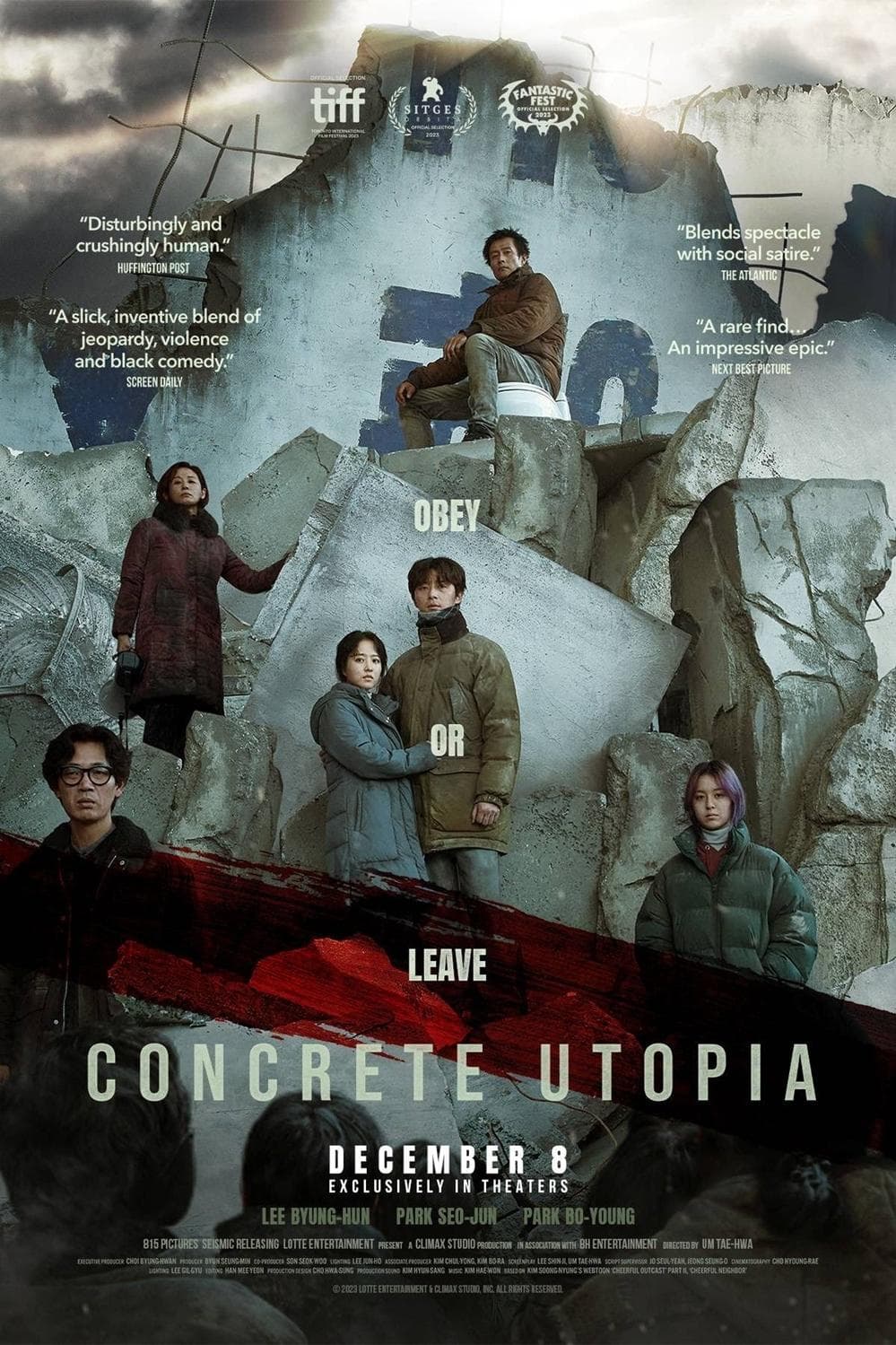
Taehwa Um
Director
Lee Byung-hun
Yeong-tak
2h 10m available with multiple audio tracks and subtitles.
Taehwa Um
Director
Lee Byung-hun
Yeong-tak

Park Seo-joon
Min-sung

Park Bo-young
Myung-hwa

Park Ji-hu
Hye-won

Kim Sun-young
Keum-ae

Kang Ae-shim
Yeong-tak's mother
Tae-goo Eom
Homeless #1

Md Shuvo
May 24, 2026🥰

Sommité Røyal
Jun 18, 2024No review content available.

Violet
Apr 15, 2024Greetings again from the darkness. Dropping ordinary people into extraordinary circumstances is sure to generate some interesting cinematic results, and that's what writer-director Tae-Hwa Eom and co-writer Lee Shin-ji do in South Korea's official submission to this year's Academy Award for Best International Feature Film. The film opens with a devastatingly powerful earthquake in 2020 Seoul. When the dust settles, the Hwang Gung Apartment building is still standing. This is in stark contrast to the surrounding rubble as far as the eye can see. The city lies in ruins, at least in this section of the heart of town. Initially things go as you'd hope with neighbors helping neighbors and families re-grouping and embracing. However, with temperatures dropping and other shelter impossible to find, the residents of the Hwang Gung Apartments become concerned about the influx of 'outsiders'. As everyone becomes anxious about resources and supplies, the building residents begin to organize, and have soon voted to evict the outsiders, while naming one man, Yeong-tak (Lee Byung-hun) as the Delegate (leader) of their cause. This, after he is seen courageously sacrificing his own safety to put out a fire in an apartment. The initial neighborly courtesies transition to self-preservation and protection of family. Much of the story focuses on one young couple, Min-sung (Park Seo-jun) and his wife, altruistic nurse Myung-hwa (Park Bo-young), who shows concern about human nature exposing the dark side for many of the fellow tenants. The apocalyptic or dystopian environment brings out the worst of many who seem unwilling to consider the proverbial 'shoe on the other foot'. The residents organize into factions: anti-crime, rations, medical, maintenance, and waste management. The organization provides not just a way to occupy minds and keep residents alive, but also an 'us against them' mentality. When Hye-won (Park Ji-hu), a Hwang Gung resident who was not there when the quake hit, makes her way back home, the tone shifts and the organization is exposed. She brings information about the Delegate, implying that he may not be the hero they presume him to be. This segment brings some flashbacks to just before the quake hit, allowing context that helps us understand more. Her arrival makes the third act even more emotional and frantic. The politics of South Korea living spaces is touched upon in the opening, but director Eom is much more focused on exploring human nature ... those ordinary folks in an extraordinary situation. Desperation leads to irrational thought and survival mode overrides all logic. Normal people become more militant, more unforgiving, and less charitable. What the apartment residents did not consider is that those "outsiders" (or "roaches", as they are called) become even more desperate and their aggressiveness is certain to rise along with their will to survive. Those living in South Korea will surely have an appreciation for the political aspects of the film, and everyone will recognize the warning signs of human nature when things go sideways - as they seem to quite frequently these days. Whether it's political commentary or a precautionary tale, filmmaker Eom makes the points effectively. Opening in NYC and LA on December 8, 2023 and nationwide on December 15, 2023.

lasisielenu
Apr 15, 2024The impressive South Korean production «Concrete Utopia", at first glance, seems like a simple show based on Kim Soong-Nyung's webtoon «Pleasant Outcast - Part II». However, it is an ambitious story that addresses the three classic themes of art (love, life and death), and deals with a concept that is always present, at stake: private property. The idea of personalized possession versus the common good has always been in the debates of coexistence on Earth: it is not an issue that communists made fashionable, but this type of property is often at the heart of joy and dramas that can reach tragic levels. Since we are aware that there is a history of humanity, nature and our own human condition question it: from the earthquakes that ends states or nations, to the fragmentation of inheritances because of greed. In fact there is no problem with us wanting to have our private property, but rather with hoarding, territorialism and extreme nationalism, all root cause of so much misery in the world. «Concrete Utopia» is film with vast panoramas, spectacular visual effects and intestine struggles, but its plot is simple: during a cold winter, an earthquake shakes and destroys a metropolis of hundreds of high-rises, condominiums, horizontal properties, housing building glued to each other. However, an apartment complex remains standing, and victims arrive at that "surviving" concrete mass. Residents give them inn at first, but then, in defense of their exclusive property, they deny them shelter, throw them out and many die of hunger and cold. The residents organize, appoint a leader, go "hunting" (such as cavemen), and return with canned food. Soon they realize that they are surrounded by the thousands of victims of the catastrophe, the internal complaints grow and the situation explodes. The movie is long (130 minutes) and the plot has sections in which there are no shocks or bombastic physical actions. The first act is fierce and dynamic and concludes with the ruthless expulsion of the homeless victims. The second act is more leisurely, showing the construction of the surviving community, in which personalities change and false identities are discovered. The brief and violent third act includes external attack and the setting of scores. Fueled by the excellent performances of Lee Byung-Hun as the leader with mud feet, that of Park Bo-Young as the sweet nurse who becomes his antagonist (both winners of the Grand Bell for Best Actor and Supporting Actress) and that of Park Seo-Joon as a young warrior, «Concrete Utopia» is a drama full of irony and sarcasm about the struggle of humans to defend their little parcels, in a framework of visual splendor for all audiences.