Overview
2h 4m available with multiple audio tracks and subtitles.
Cast & Crew
22 members
Giulio Ricciarelli
Director
André Szymanski
Thomas Gnielka
2h 4m available with multiple audio tracks and subtitles.
Giulio Ricciarelli
Director
André Szymanski
Thomas Gnielka
Alexander Fehling
Johann Radmann

Friederike Becht
Marlene Wondrak
Johannes Krisch
Simon Kirsch
Johann von Bülow
Staatsanwalt Haller
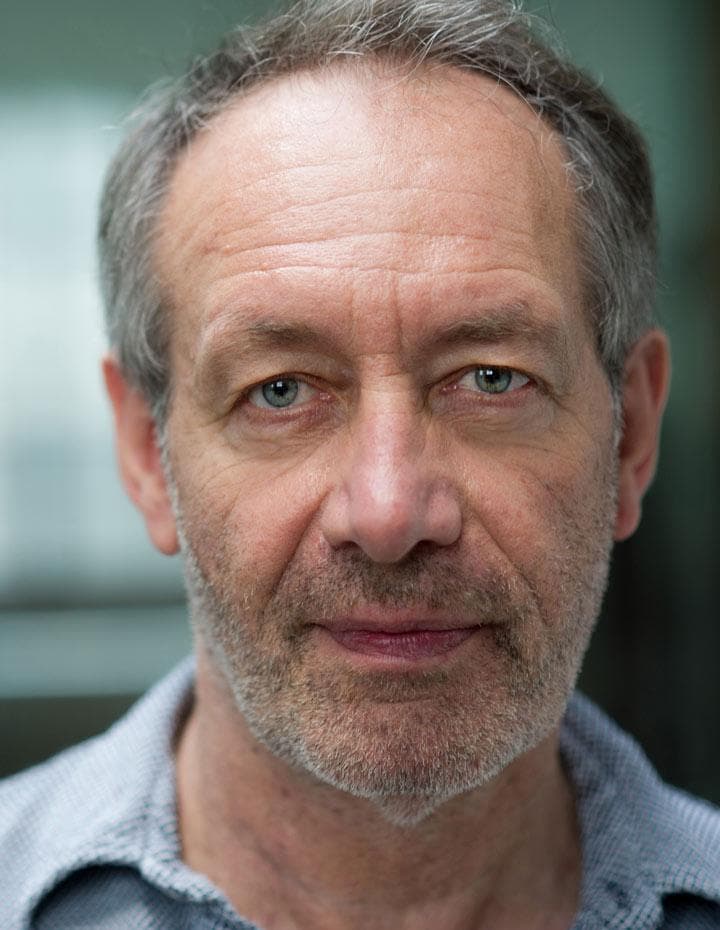
Robert Hunger-Bühler
Oberstaatsanwalt Friedberg

Hansi Jochmann
Schmittchen

Suhii96
Jul 24, 2025Things seem dated and the behavior in this movie almost feels like it. But there was a time where people seemed to want to forget rather than face certain things in public. Speak about cruelties makes things real, rather than just saying it's a story. But just the fact, that people were talking about things happening, remembering them (for better or worse) made it personal. And while the movie is not really surprising in its structure or where it's heading, it's still manages to build some tension (character secrets and values and more things that are revealed along the main story/themes). Never forget and never repeat ... but is this problem/issue that easy to overcome?

ihirwelamar
Jul 24, 2025Labyrinth of Lies deals with a pretty much forgotten chapter in German history—the 1963 Frankfurt Auschwitz trials. State prosecutors in the German city of Frankfurt brought former mid-and-low level functionaries of the Auschwitz death camp to trial despite opposition from Nazi sympathizers and an apathetic public. Perhaps the most surprising thing one learns from the film is just how ignorant the general population was of Auschwitz and the Nazi era when the story begins in 1958. The protagonist is a composite character, Johann Radmann, based on three real-life prosecutors, played by the popular German actor, Alexander Fehling. When we're first introduced to Radmann, he has a low level job in the prosecutor's officer handling traffic violations. His by-the-book demeanor immediately becomes apparent when he refuses to allow a pretty Fraulein, to pay a reduced fine for a traffic infraction. Through the efforts of Tomas Gnielka, a journalist obsessed with Germany's embrace of Nazism, Radmann soon gets wind of a former Auschwitz guard now working as a school teacher. Radmann is rebuffed by the lead prosecutor in the office who disparages him for taking an interest in the former Auschwitz guard—in the lead prosecutor's view, this will only open up a can of worms. But a higher-up, Fritz Bauer— the Attorney General-- is sympathetic toward efforts to uncover the crimes of the Nazi past, and appoints Radmann as the special prosecutor responsible for prosecuting those responsible for crimes at the death camp. Radmann gets his first leads from Simon Kirsch, an Auschwitz survivor, introduced to him by Gnielka. Kirsch is uncooperative at first but later, along with other survivors, provides important testimony that will aid Radmann in his quest to bring various Auschwitz functionaries to justice. Radmann also digs up evidence from files at an US Army base. Director Giulio Ricciarelli does well in chronicling the extreme state of denial many Germans were in as they grappled with the legacy of Nazi horrors. There are also sympathizers who do everything they can (including throwing a rock with a swastika on it, through Radmann's window), to derail him from finishing his job. You would never guess that the actual Auschwitz participants who now have ordinary jobs were stone-cold killers, just a little over a decade before. Labyrinth of Lies gets bogged down when Radmann becomes obsessed with tracking down the notorious "Butcher of Auschwitz", Dr. Josef Mengele, in spite of orders to desist from his boss Bauer. Radmann's efforts to capture Mengele prove fruitless, despite having learned that Mengele has been returning to Germany from South America to visit his relatives. Since we already know that Mengele was never captured, there is very little point in chronicling Radmann's unsuccessful quest for a good part of the second half of the narrative. Radmann has his "dark moment" of the second Act, when he becomes overly self-righteous in holding his fellow Germans to account for their indifference during the Nazi years. It turns out that Gnielka, the fanatically anti-Nazi journalist, was actually a 17 year old worker at the death camp; and Redmann's girlfriend, Marlene, has been making profits in selling clothes to the wives of former Nazis. At one point Radmann quits the prosecutor's office and signs on with a hot-shot attorney but eventually sees the light and agrees to finish his prosecutorial duties. Labyrinth of Lies is a valuable film in that it paints an indelible portrait of a society coming to grips with its dark past. While not everything works in the film (the Mengele sequence is particularly overdone), the exploration of this largely forgotten chapter in German history, is most welcome.

Seyfel-ziyach-AlArabi
Jul 24, 2025It's 1958 Frankfurt, West Germany. Johann Radmann is a young by-the-books prosecutor toiling in traffic court and believing his father to be anti-Nazi. Reporter Thomas Gnielka brings the case of Charles Schulz, a teacher suspected of being a Nazi guard in Auschwitz. Nobody cares about what happened there and actively ignores the collective Nazi past. He starts a relationship with Marlene Wondrak. Gnielka introduces him to camp survivor Simon Kirsch. Radmann starts digging into the past and building a case against many. His main obsession is camp doctor Josef Mengele who experimented on the prisoners. The history is very compelling. However, the story lacks danger or intensity. It needs some additional drama. There is some professional and personal drama but none of it is that intense. The production and acting is first rate. It is a very compelling watch although there are no big surprises.

user55358560 binta30
Jul 24, 2025Major Parker (Tim Williams). Originally in German in the movie (the American Major speaks German to Johann Radmann): "You were all Nazis. In the Eastern sector, now you are all communists. Jesus, you Germans! If little green men from Mars landed tomorrow, you would all become green". Finally a movie that shows the culpability of the common German people in the Holocaust! The Holocaust didn't happen just because of 4 Nazi psychos, but thanks to millions of ordinary men (90% of the Germans from 1940-41) who supported the Nazi ideology and happily collaborated in the massacres of millions of innocent men, women and children. By the way, two books that brilliantly demonstrate the collaboration of the vast and overwhelming majority of Germans in the gigantic Nazi killing machine are Rethinking the Holocaust, by Yehuda Bauer (a masterpiece) and Hitler's Willing Executioners: Ordinary Germans and the Holocaust, by Daniel Goldhagen. Im Labyrinth des Schweigens shows the fast oblivion in Germany of the atrocities committed by the Germans just 10 years after the liberation of the Nazi concentration and extermination camps, and the impunity millions of murderers enjoyed, people who tortured, massacred and gassed millions of Jews and non-Jews in the 1940s. Only very few Germans heard about Auschwitz before the famous Eichmann trial in 1961. Im Labyrinth des Schweigens focuses on the the period prior to the trials that took place in Frankfurt between December 20, 1963 and August, 1965 (called in German der Auschwitz- Prozess) against very few SS members who operated in Auschwitz. The trials were ridiculous and a spit on the 1,100,000 victims who were massacred and gassed in Auschwitz. From the 7,000 SS members who operated in Auschwitz during the war, only 22 dogs were judged at the Frankfurt Trials. Nevertheless, the attempt for a pinch of justice was important. From the 22 SS members, only 6 got life imprisonment, many got ridiculous sentences ranging from 3 to 10 years, and 5 were simply released. Im Labyrinth des Schweigens shows the extreme difficulty of judging the murderers because of the silence the Germans kept and their attempt to hide the truth. Im Labyrinth des Schweigens got many prizes (although none were extremely important) and it was the film that Germany presented for the category 'Best Foreign Language Film' (Oscars, 2016), although it was not nominated. I always believed that the only way Germans (and Austrians) have today to clean the blood their parents and grandparents spilled is to be deeply anti-Nazi. But how many Germans and Austrians are there today who are deeply anti-Nazi? "Schweigen" is "silence" in German. The correct translation of the title would be: "In the Labyrinth of Silence". In English the title has been poorly translated as Labyrinth of Lies. The best: the fact that the culpability of the German common pig in the Holocaust finally arouses. The worst: that even when the film shows Fritz Bauer (the judge who made the Frankfurt Trials possible), the character of Johann Radmann (brilliantly performed by Alexander Fehling) is fictitious.